
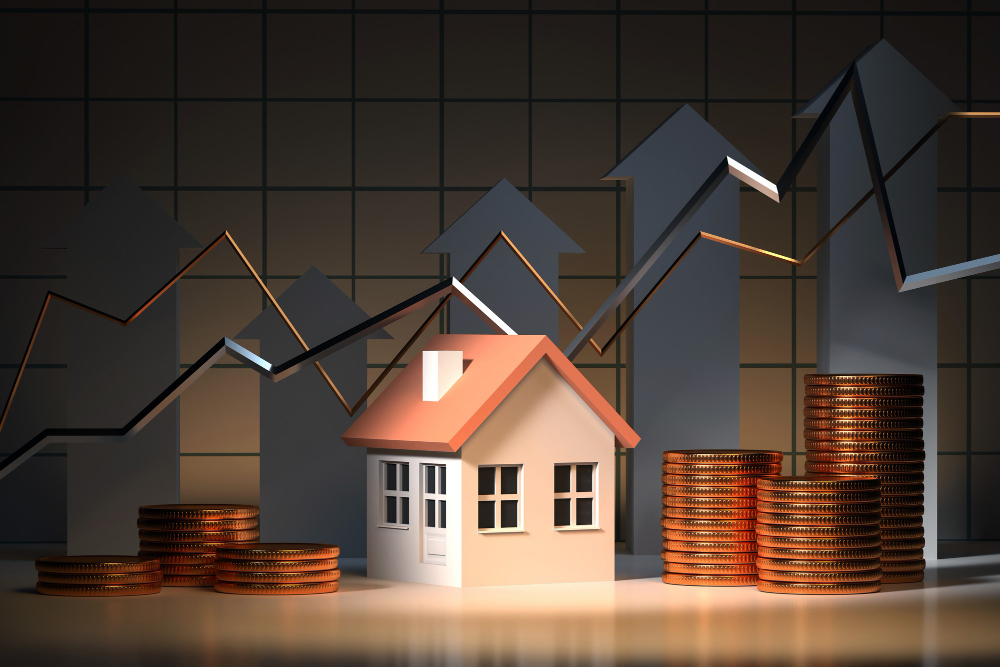

Inflation shapes nearly every financial decision households and investors make, and real estate is no exception. While rising prices often create uncertainty across markets, property has historically behaved differently from many other asset classes. In many cases, it acts as a buffer against purchasing power erosion and a driver of long-term wealth accumulation.
Understanding how inflation interacts with property values, rental income, borrowing costs, and investor behavior can help buyers and investors make smarter decisions across market cycles.
Understanding the Relationship Between Inflation and Real Estate
Inflation refers to the general increase in prices of goods and services over time. As inflation rises, the purchasing power of money declines. Real estate behaves differently from cash because it represents a tangible asset whose replacement cost and income potential typically rise with inflation.
The connection between inflation and property values exists through several channels:
Replacement cost increases
When inflation raises the cost of construction materials, labor, and land acquisition, building new properties becomes more expensive. This often pushes up the value of existing homes.
Rental income growth
Landlords often adjust rents upward during inflationary periods to maintain returns, which increases income-producing potential and strengthens property valuations.
Currency value erosion
As money loses value over time, physical assets like land and housing tend to retain or increase their relative worth.
Together, these factors explain why property is often considered a long-term inflation-aligned investment.
How Inflation Affects Property Prices
Property prices do not always rise immediately with inflation, but over time there is a strong relationship between the two.
Rising Construction Costs Support Higher Property Values
Inflation increases the price of:
- Cement
- Steel
- Labor
- Transportation
- Land acquisition
As replacement costs climb, existing properties become more valuable because building equivalent structures becomes more expensive.
Demand Patterns Shift During Inflationary Cycles
Inflation can influence buyer behavior in two opposing ways:
- Some buyers accelerate purchases to lock in current prices
- Others delay purchases due to rising interest rates
The net effect depends on how aggressively central banks respond to inflation.
Land Scarcity Amplifies Value Growth
Unlike many assets, land supply is limited. During inflationary periods, this scarcity strengthens appreciation potential, particularly in urban growth corridors and infrastructure-driven regions.
Inflation and Rental Income Growth
Rental income plays a central role in long-term property returns. During inflation, landlords often adjust lease rates upward to keep pace with rising costs.
Key drivers behind rent increases include:
- Higher maintenance expenses
- Rising property taxes
- Increased demand in urban areas
- Wage growth across working populations
Properties located near employment hubs, transit corridors, and educational institutions tend to benefit the most from rent escalation during inflationary periods.
Over time, growing rental income strengthens both cash flow and asset valuation.
The Role of Interest Rates During Inflation
Central banks frequently increase interest rates to control inflation. This creates mixed effects for real estate investors.
Higher Borrowing Costs
Rising mortgage rates can:
- Reduce purchasing affordability
- Slow short-term demand
- Temporally stabilize price growth
However, investors who lock in loans before rate hikes often benefit significantly.
Loan Value Declines in Real Terms
One of the most overlooked advantages of inflation is that fixed-rate loan repayments effectively become cheaper over time in real purchasing power terms.
For example:
If inflation rises while your EMI remains fixed, the real burden of repayment declines year after year.
This strengthens long-term leveraged property returns.
Real Estate as an Inflation Hedge
Real estate is widely considered one of the most reliable inflation-resistant assets. This is because property generates value through both appreciation and income.
It offers protection through:
Asset appreciation
Property prices often rise alongside construction costs and replacement value.
Income growth
Rental yields typically adjust upward with inflation.
Leverage advantage
Borrowed funds become easier to repay in inflation-adjusted terms.
Tangible ownership
Unlike paper assets, real estate represents a physical resource with intrinsic utility.
Together, these features make property especially attractive during long inflation cycles.
Long-Term Real Estate Returns During Inflationary Periods
Inflation impacts returns differently depending on holding duration.
Short-Term Effects
In the short run, inflation may create:
- Volatility in borrowing costs
- Temporary demand slowdowns
- Market sentiment uncertainty
These effects are usually cyclical rather than permanent.
Long-Term Effects
Over longer horizons, inflation tends to support:
- Property price appreciation
- Rental income expansion
- Improved leverage efficiency
- Wealth preservation against currency erosion
Historically, investors who hold property across multiple economic cycles benefit the most.
Location Matters More During Inflation
Not all properties respond equally to inflation.
High-performing locations typically include:
- Emerging infrastructure corridors
- Transit-linked neighborhoods
- Employment centers
- Education hubs
- Expanding suburban zones
Properties in these areas experience stronger rental demand and faster appreciation during inflationary environments.
Risks Investors Should Consider
Although real estate often benefits from inflation, it is not immune to challenges.
Important risks include:
Interest rate spikes
Higher borrowing costs can temporarily reduce affordability.
Policy interventions
Governments may introduce housing regulations affecting pricing.
Liquidity constraints
Real estate cannot be sold as quickly as stocks or bonds.
Maintenance cost escalation
Inflation increases ownership expenses over time.
Careful planning and long-term strategy help manage these risks effectively.
Strategies to Maximize Returns During Inflation
Investors can strengthen performance by following practical approaches.
Consider focusing on:
- Properties with strong rental demand
- Locations near infrastructure expansion
- Fixed-rate financing structures
- Long holding horizons
- Diversified property portfolios
These strategies improve resilience during inflation-driven market shifts.
Conclusion
Inflation influences property markets through multiple channels, including rising construction costs, rental income growth, interest rate changes, and currency value shifts. While short-term volatility may appear during inflationary cycles, long-term real estate investments have historically demonstrated resilience and wealth-building potential.
Investors who prioritize location quality, leverage wisely, and maintain long-term ownership strategies are often best positioned to benefit from inflation-driven property appreciation and income growth.
Frequently Asked Questions
1. Does inflation always increase property prices
Not always in the short term. However, over longer periods, inflation generally contributes to higher property values due to rising construction costs and land scarcity.
2. Is real estate better than gold during inflation
Both assets perform well during inflation, but real estate offers the added advantage of rental income alongside appreciation.
3. How do rising interest rates affect property investment during inflation
Higher interest rates can reduce short-term affordability but may strengthen long-term returns for investors with fixed-rate loans.
4. Can rental income fully offset inflation
In strong demand locations, rental income often keeps pace with inflation and sometimes exceeds it, improving investor cash flow.
5. Should investors avoid buying property during high inflation periods
Not necessarily. Inflation can create opportunities, especially when buyers secure assets before replacement costs rise further.
6. Which types of properties perform best during inflation
Residential properties in growth corridors and commercial spaces near employment hubs typically perform well.
7. How long should investors hold property to benefit from inflation
Holding property across multiple market cycles usually delivers the strongest inflation-adjusted returns.
Comments are closed.