
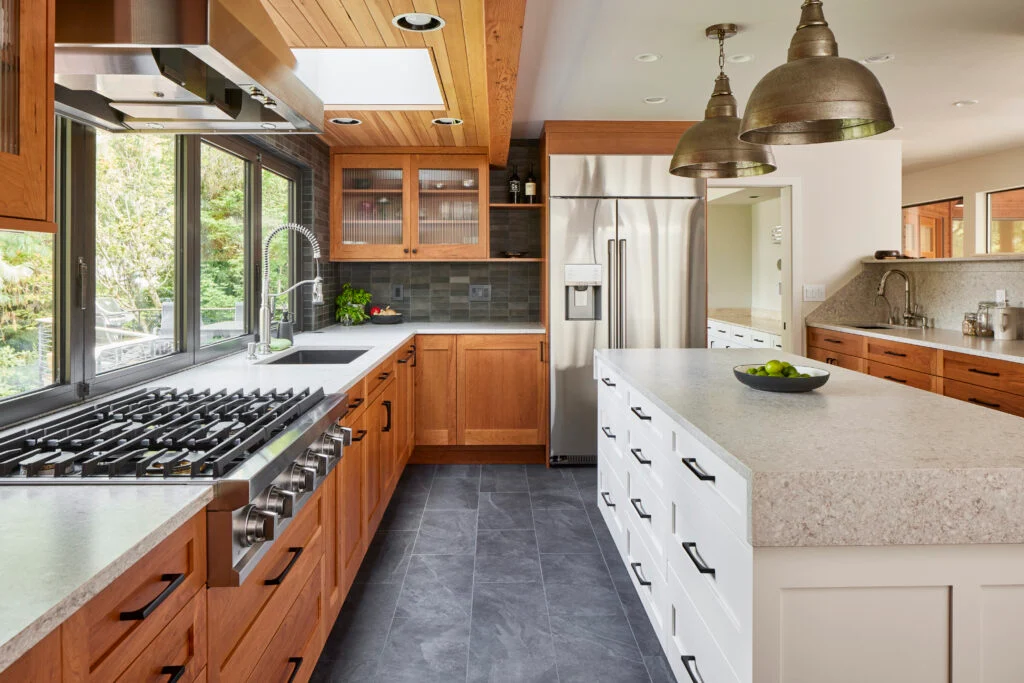

A well-planned kitchen renovation improves daily efficiency, enhances comfort, and increases property value. Modern kitchens are no longer just cooking areas. They serve as multifunctional spaces for dining, storage, social interaction, and smart living. Thoughtful upgrades can transform even a compact kitchen into a highly functional and visually appealing workspace.
This guide explores practical renovation ideas that combine design, usability, and long-term durability.
Plan Layout for Maximum Efficiency
The layout determines how comfortably the kitchen functions. A smart arrangement reduces unnecessary movement and improves workflow.
Popular modern layouts include:
- L-shaped kitchens for efficient corner utilization
- U-shaped kitchens for maximum storage and workspace
- Parallel kitchens suitable for compact homes
- Open-plan kitchens connecting living and dining areas
Maintaining the traditional work triangle between sink, stove, and refrigerator helps streamline daily tasks.
Upgrade to Smart Storage Solutions
Storage is the backbone of a functional kitchen. Modern renovation focuses on maximizing every inch of available space.
Consider adding:
- Pull-out pantry units
- Deep drawer organizers
- Corner carousel systems
- Vertical cabinets reaching ceiling height
- Hidden appliance compartments
These solutions reduce clutter and improve accessibility.
Choose Durable and Low-Maintenance Materials
Material selection affects both longevity and appearance. Modern kitchens prioritize surfaces that resist stains, moisture, and heat.
Recommended materials include:
- Quartz countertops for durability and elegance
- Laminate finishes for affordability and versatility
- Granite surfaces for long-term strength
- Ceramic backsplashes for easy cleaning
Selecting the right materials ensures the kitchen remains functional for years with minimal upkeep.
Improve Lighting for Better Visibility
Lighting plays a crucial role in usability and ambiance. A layered lighting strategy enhances both safety and aesthetics.
Include three types of lighting:
- Task lighting under cabinets for food preparation
- Ambient lighting for overall brightness
- Accent lighting to highlight design elements
Modern kitchens often combine LED strips, pendant lights, and recessed ceiling fixtures for balanced illumination.
Integrate Energy Efficient Appliances
Replacing outdated appliances improves performance and reduces electricity consumption. Energy-efficient equipment supports sustainable living while lowering utility costs.
Modern upgrades may include:
- Induction cooktops
- Built-in ovens
- Smart refrigerators
- Dishwasher units with water-saving features
Integrated appliances also create a seamless visual appearance.
Optimize Countertop Workspace
Adequate countertop space supports smoother meal preparation and organization. Renovation planning should prioritize clear working surfaces.
Practical improvements include:
- Extending countertop edges
- Adding breakfast counters
- Installing foldable worktops in smaller kitchens
- Creating island counters where space allows
These upgrades enhance both functionality and flexibility.
Select Modern Cabinet Designs
Cabinet styling influences both usability and visual appeal. Contemporary renovations favor clean lines and minimal detailing.
Popular cabinet choices include:
- Handle-less cabinets for a sleek look
- Soft-close drawers for quiet operation
- Matte finishes for subtle elegance
- Glass-front cabinets for display sections
Well-designed cabinetry improves accessibility while maintaining a modern aesthetic.
Install a Functional Kitchen Island
Kitchen islands serve multiple purposes in modern homes. They add workspace, storage, and seating within one structure.
Depending on available space, an island can function as:
- A preparation station
- A casual dining counter
- A storage extension
- A location for built-in appliances
Even compact movable islands provide flexibility in smaller kitchens.
Improve Ventilation for Healthier Cooking Environment
Proper ventilation removes smoke, grease particles, and cooking odors. Renovation projects should include effective airflow planning.
Essential ventilation upgrades include:
- Chimneys with strong suction capacity
- Exhaust fans positioned near cooking zones
- Windows for natural airflow where possible
Better ventilation protects walls, cabinets, and indoor air quality.
Add Smart Technology for Modern Convenience
Smart kitchen features improve efficiency and simplify daily routines. Technology integration is becoming a standard part of modern renovation planning.
Useful smart upgrades include:
- Motion sensor lighting
- Touchless faucets
- App-controlled appliances
- Smart storage monitoring systems
These innovations enhance both convenience and hygiene.
Use Neutral Color Schemes for Timeless Appeal
Color selection influences how spacious and inviting the kitchen feels. Neutral tones remain a preferred choice for modern renovation projects.
Popular combinations include:
- White and wood textures
- Grey and matte black accents
- Beige with warm lighting tones
- Soft pastels with metallic finishes
Neutral palettes maintain visual balance and adapt easily to future design updates.
Focus on Easy Maintenance Design Features
A functional kitchen should simplify cleaning and maintenance tasks.
Consider incorporating:
- Anti-stain backsplash materials
- Fingerprint-resistant cabinet finishes
- Seamless countertops
- Concealed waste bins
Low-maintenance features help preserve the kitchen’s appearance over time.
Improve Flooring for Safety and Durability
Kitchen flooring must withstand moisture, spills, and heavy foot traffic. Renovation is the right time to upgrade to safer and stronger materials.
Recommended flooring options include:
- Vitrified tiles
- Anti-slip ceramic tiles
- Engineered wood flooring
- Waterproof vinyl flooring
Choosing durable flooring improves both safety and comfort.
FAQ Section
How long does a typical kitchen renovation take
Most kitchen renovations take between two and six weeks depending on layout changes, material availability, and installation complexity.
What is the most important element in kitchen renovation planning
Layout planning is the most critical factor because it directly affects movement, workflow efficiency, and storage organization.
Is it necessary to replace appliances during renovation
Replacing appliances is optional but recommended if existing units are outdated, inefficient, or incompatible with the new layout.
How can small kitchens be made more functional
Small kitchens become more efficient through vertical storage solutions, compact appliances, foldable counters, and improved lighting placement.
Which countertop material is best for long-term durability
Quartz and granite are considered highly durable options due to their resistance to scratches, heat, and stains.
Should ventilation be upgraded during kitchen renovation
Yes, upgrading ventilation improves indoor air quality and protects cabinets and walls from grease accumulation.
Does kitchen renovation increase property value
A well-designed kitchen renovation significantly enhances property appeal and can increase resale value by improving both functionality and appearance.
Comments are closed.