

Moving to Pune for college means navigating a rental market where hostel waitlists stretch months, PG owners demand ₹20,000-30,000 in advance, and lease terms feel designed for long-term residents. It does not suit the students juggling semesters, internships, and placement schedules. The decision isn’t just about rent; it’s about whether your accommodation supports or complicates the next 2-4 years of your life.
This guide breaks down three accommodation types students actually consider: college hostels, paying guest arrangements and co-living spaces in Pune. We’ll compare real costs, lifestyle trade-offs, and what matters when you’re balancing academics with internships, certifications, and social life in a new city.
What Goes Beyond Monthly Rent?
College hostels charge ₹40,000-80,000 annually (₹3,300-6,600/month), but availability is limited; most fill via merit or distance quotas. You’re paying for proximity to campus and institutional oversight, but sacrificing flexibility. Curfews, visitor restrictions, and semester-locked contracts mean you can’t stay during breaks or adjust to internship schedules.
PGs range from ₹8,000 for basic shared rooms to ₹15,000 for single occupancy. Add ₹5,000-7,000 for meals (if not included), and total monthly costs hit ₹13,000-22,000. The catch? Most require 2-3 months of deposit amount upfront, enforce strict meal timings, and charge separately for Wi-Fi, laundry, and AC usage. Hidden costs accumulate fast.
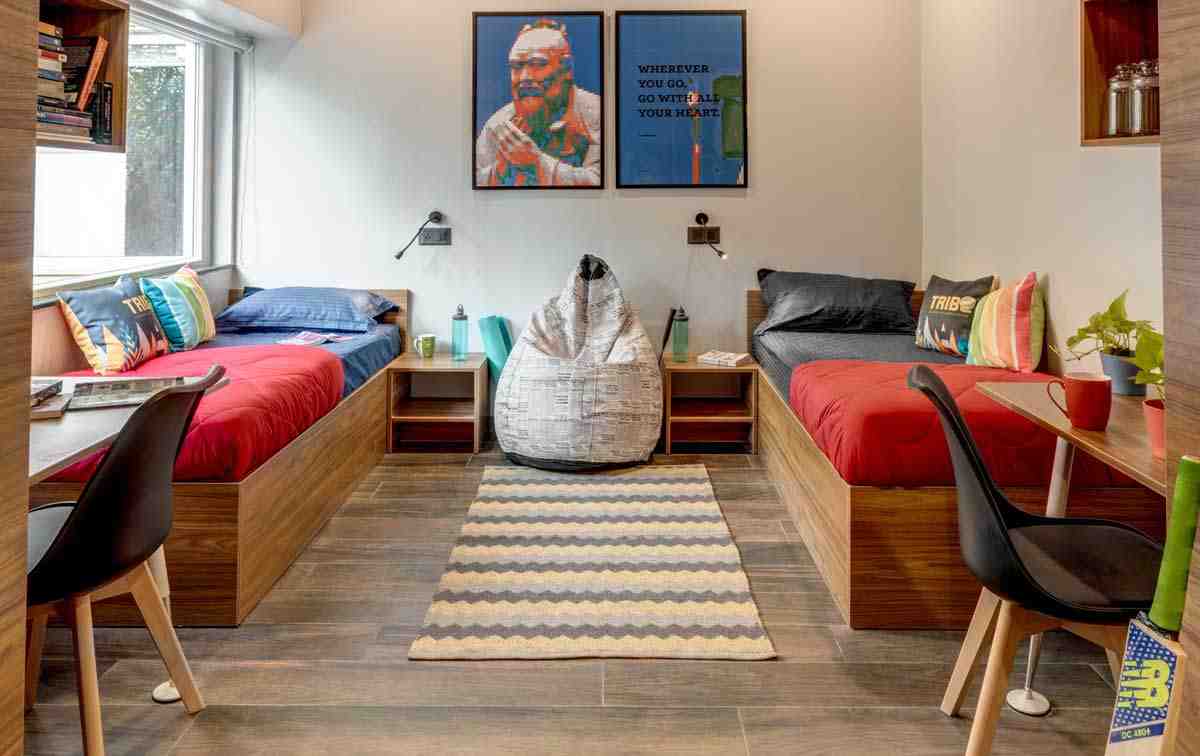
Co-living in Pune targets the gap between institutional hostels and traditional PGs. Purpose-built student co-living bundles furnished rooms, high-speed Wi-Fi, study areas, housekeeping and laundry into all-inclusive pricing, typically ₹15,000-25,000/month, depending on room type and location. The model eliminates deposit negotiations and itemized billing, trading higher base rent for predictable costs and managed convenience.
The math shifts when you factor time costs. A ₹10,000 PG in Shivajinagar might add 90 minutes daily to your Hinjawadi college commute, while ₹18,000 co-living 10 minutes from campus saves 15 hours weekly time which gets redirected to projects, placements or actual rest.
Lifestyle & Practical Considerations
Privacy vs. community plays out differently across options. Hostels enforce shared living with limited personal space but built-in peer networks. PGs offer more autonomy but often lack common areas for group study or socializing; you’re renting a room, not joining a community.
Modern co-living spaces are designed for both: private rooms with dedicated study setups plus shared co-working areas, lounges and recreational zones. For students balancing individual coursework and group projects, this hybrid model works. Features like 24/7 access, no curfews and women-only floors (increasingly standard) address safety concerns parents prioritize without infantilizing residents.
Flexibility matters more for students than working professionals. Semester breaks, summer internships and campus placements create unpredictable schedules. College hostels lock you into academic calendars. Most PGs require 30-day notice periods and resist mid-month departures. Co-living providers in Pune increasingly offer monthly rolling contracts which you can extend or exit based on internship confirmations or placement outcomes without forfeiting deposits.
Infrastructure reliability isn’t glamorous but impacts daily life. Power cuts during assignment deadlines, Wi-Fi that throttles during video lectures, or broken ACs in Pune’s April heat turn cheap rent into a false economy. Managed accommodations maintain infrastructure proactively; PGs troubleshoot reactively. The difference shows in exam weeks.
Sealing the Deal
The right choice depends less on which option is universally “best” and more on your specific priorities. Choose college hostels if subsidized rent matters most and you value on-campus immersion over flexibility. Opt for PGs if you want maximum independence, don’t mind managing household logistics, and have time to vet landlords carefully.
Co-living makes sense if you’re prioritizing convenience, predictable costs, and infrastructure you can rely on during high-stress academic periods, especially if your schedule includes internships, certifications, or placement preparation alongside coursework. Calculate total monthly costs, including commute time, and visit properties during evening hours to check actual living conditions versus marketing photos.
Pune’s student accommodation market offers real options now. Choose the one that simplifies your daily life instead of adding friction to an already demanding schedule.
Comments are closed.