
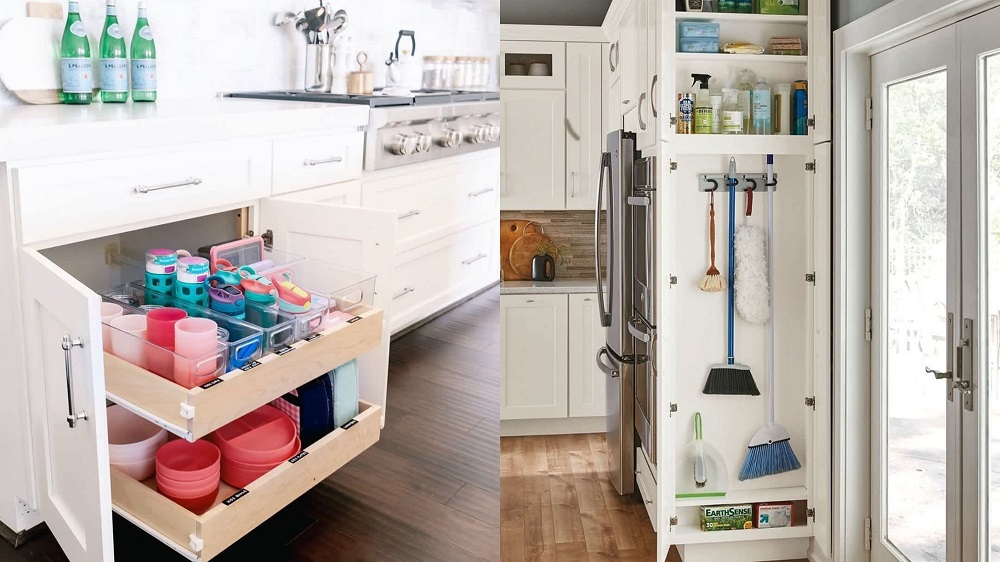

An efficient kitchen is not just about aesthetics. It shapes how quickly meals come together, how smoothly cleanup happens, and how enjoyable cooking feels each day. Thoughtful organization reduces wasted movement, prevents clutter from returning, and helps every item serve a clear purpose.
Below are practical kitchen organization strategies that improve workflow, save time, and make daily routines easier without requiring expensive renovations.
Create Activity Zones for Faster Workflow
Instead of storing items wherever space appears available, group them based on how they are used. This simple shift dramatically reduces unnecessary steps while cooking.
Organize your kitchen into functional zones such as:
- Prep zone: cutting boards, knives, mixing bowls, measuring tools
- Cooking zone: spatulas, ladles, oils, spices, pans
- Cleaning zone: dish soap, scrubbers, towels, drying rack
- Storage zone: containers, pantry staples, wraps and foils
When tools live close to where they are used, movement becomes natural and efficient.
Declutter Before You Organize Anything
Efficiency starts with removing items that slow you down.
Many kitchens hold duplicates, rarely used appliances, or expired pantry products that quietly take valuable space. Begin by emptying one drawer or cabinet at a time and sorting items into three categories:
- Keep
- Relocate
- Remove
Focus on storing only what supports your daily cooking habits. Fewer items create clearer storage decisions and easier maintenance later.
Use Vertical Storage to Multiply Space
Vertical storage is one of the most powerful efficiency upgrades in any kitchen.
Walls, cabinet interiors, and unused corners can hold more than expected when organized intentionally. Consider installing:
- Wall-mounted racks for utensils
- Magnetic strips for knives
- Stackable shelf inserts inside cabinets
- Hooks under shelves for mugs or tools
These additions reduce drawer crowding and keep frequently used tools within reach.
Make Drawers Work Smarter with Dividers
Drawers often become clutter traps when items shift freely. Dividers transform them into efficient storage systems.
Use dividers to separate:
- Cooking tools
- Measuring spoons
- Cutlery
- Wraps and foils
- Spice containers
When each item has a defined location, cleanup becomes quicker and items remain easy to find.
Store Frequently Used Items at Arm Level
The most accessible spaces should hold your most frequently used tools.
Keep everyday essentials such as:
- cooking spoons
- knives
- oils
- spices
- plates and bowls
between waist and shoulder height whenever possible.
Reserve higher shelves for seasonal items and lower cabinets for heavier cookware like pressure cookers or mixers. This arrangement reduces strain and speeds up meal preparation.
Organize the Pantry by Visibility and Categories
A well-structured pantry saves time during both cooking and grocery planning.
Group similar items together such as:
- grains and lentils
- baking supplies
- snacks
- canned foods
- breakfast items
Transparent containers help identify quantities quickly and prevent duplicate purchases. Labeling shelves also supports consistent organization across the household.
Use Door Interiors for Hidden Storage
Cabinet doors offer valuable storage opportunities that are often overlooked.
You can attach:
- spice racks
- cleaning supply holders
- measuring spoon hooks
- cutting board organizers
This technique frees up shelf space while keeping essentials easily accessible.
Rotate Items Using the First In First Out Method
Food waste reduces efficiency and increases costs. A simple rotation habit solves both problems.
Place newly purchased items behind older ones so earlier purchases are used first. Apply this method especially to:
- packaged foods
- spices
- refrigerated items
- dry storage containers
It keeps inventory fresh and improves kitchen workflow.
Keep Countertops Purpose Driven
Clear countertops encourage faster cooking and easier cleaning.
Limit surface storage to essential items such as:
- kettle
- knife block
- frequently used spice tray
- cooking oil set
Everything else should return to cabinets or drawers after use. A purposeful workspace improves focus and movement while preparing meals.
Label Storage for Long Term Consistency
Labels prevent confusion and maintain structure over time.
Use labels for:
- pantry containers
- freezer storage
- spice jars
- cabinet categories
This small habit helps everyone in the household follow the same organization system without needing reminders.
Maintain Organization with a Weekly Reset Routine
Even the best systems drift without maintenance.
Set aside a short weekly reset routine that includes:
- returning misplaced items
- wiping shelves
- checking pantry inventory
- discarding expired products
Consistency keeps your kitchen functioning efficiently throughout the year.
Frequently Asked Questions
How often should a kitchen be reorganized for best efficiency
A light reset once each week and a deeper review every three months usually keeps storage systems working effectively without requiring major effort.
What is the most important first step in kitchen organization
Removing unused items creates the foundation for any successful organization system and makes future storage decisions clearer.
Are drawer organizers better than cabinet organizers
Both serve different purposes. Drawer organizers improve access to small tools while cabinet organizers help structure larger cookware and pantry items.
How can small kitchens stay organized long term
Using vertical storage, limiting duplicates, and keeping countertops clear helps small kitchens remain functional without feeling crowded.
Should spices be stored near the stove for convenience
They can be stored nearby for easy access but should be protected from direct heat to maintain freshness and flavor.
How do labels improve kitchen efficiency
Labels reduce decision making time and help every household member return items to their correct location consistently.
What is the easiest habit that keeps kitchens organized daily
Returning items immediately after use prevents clutter buildup and maintains an efficient workflow throughout the day.
Comments are closed.